Safety and Emergency
Emergency numbers, incident reporting and what to do when something happens. Being able to give your position is the critical preparation.
Last updated 2026-09-01Flight incidents are reported to the Slot Service Centre: shmfethiye@kapadokya.edu.tr
This page is about preparation before you fly and what to do when something happens. For the full set of local rules see local rules.
On this page
Reporting accidents and incidents
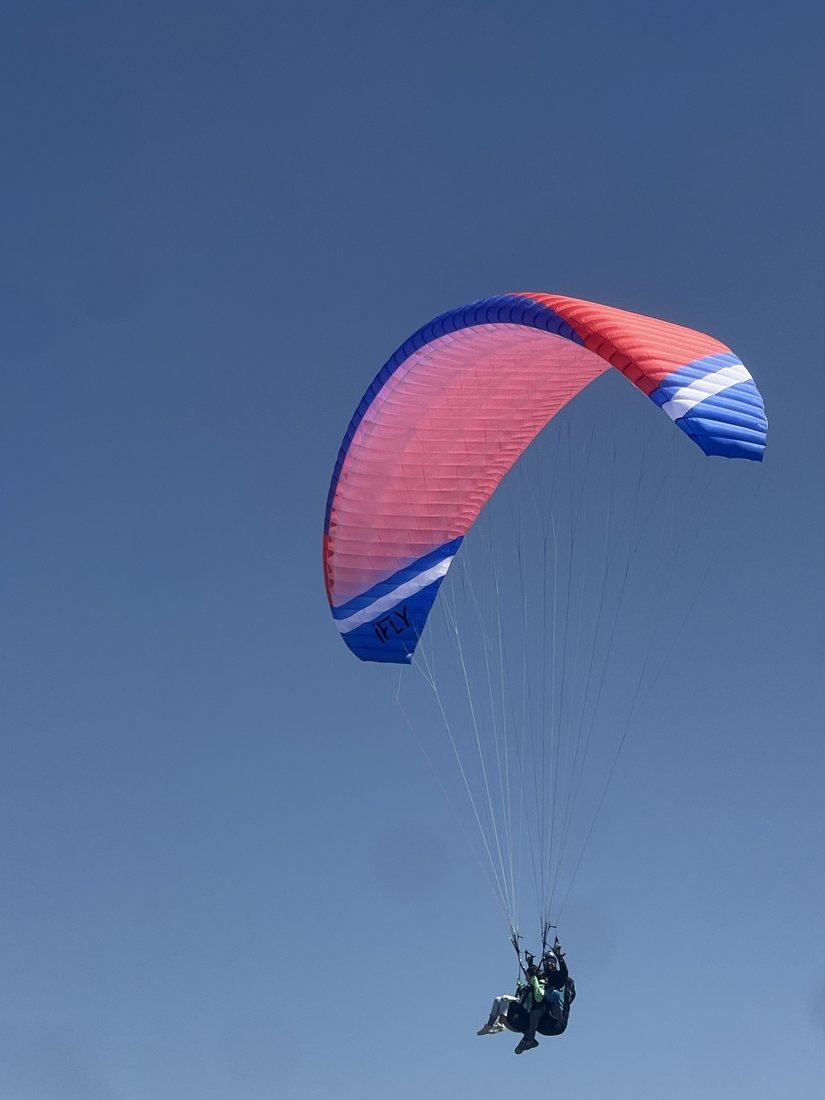
The directive does not place the duty to report only on the pilot involved. Every pilot who witnesses or becomes aware of an accident is required to report it. Reports go to the Slot Service Centre and other relevant authorities as soon as possible.
- If life is at risk, call 112 first.
- If the location is hard to reach, give the position as precisely as you can.
- Once the situation is under control, report it to the Slot Service Centre.
Giving your position
The slopes of Babadağ are steep and largely wooded. If you come down in trees or somewhere far from a road, finding you depends on the position you give. The most important preparation is to learn how to read coordinates off your flight instrument before you need to.
- Find out which screen shows coordinates on your instrument before you fly.
- Know the format it uses. The formats used here are degrees, minutes and
seconds such as
36°32'20"N 29°10'11"E, or decimal degrees such as36.538972, 29.169722. - If you have phone signal, send your location as a message as well; it is more reliable than describing it by voice.
- Describe nearby landmarks: a road, a junction, the cable car line, a stream bed.
The directive makes carrying a radio mandatory on every flight, but there is no common frequency agreed for the site. Decide on one before you launch and know each other's flight plan. Having someone who knows where you were going is the most practical thing that shortens a search.
Tree landings
Because the slopes here are wooded, a tree landing is a real possibility. If you end up in a tree, the first decision is the one that matters.
- Do not try to climb down yourself. You are higher than it looks from the ground and the wing is the only thing holding you. Waiting for help beats falling.
- Do not try to free the wing. If it is caught in the branches, releasing it can drop you.
- Stay in your harness and secure yourself. The more you move, the more likely you are to lose your balance.
- Call for help and give your position. Visibility is poor in the forest, so coordinates make the difference.
- Do not deploy your reserve as a way of getting down.
Safety equipment
The following are not recommendations, they are required by the directive.
| Equipment | Rule |
|---|---|
| Helmet | Mandatory at every stage of the flight. |
| Reserve parachute | Must match the weight limits. Keep track of the repack date. |
| Radio | Mandatory on every flight. |
| Insurance | Amateur pilots are responsible for holding personal accident insurance and keeping it current. |
| Wing | Must have passed an internationally valid test standard and be certified. Gliders without a check may not be used, and equipment past its service life may not be flown. |
| Flight card | Issued for every flight and carried with you in the air. |
Closing your flight
A flight record left open in the system means you are still shown as airborne. That can trigger an unnecessary search and it can delay someone genuinely missing from being noticed. Close your flight in the system after you land.
Your own condition
The directive makes the pilot responsible for protecting themselves and lists the things that reduce performance one by one: alcohol, irregular eating, medication, disrupted sleep and poor physical condition. A pilot under ongoing medical treatment may not take part.
- Alcohol is prohibited in the 24 hours before a flight. The Slot Service Centre may test; a result above 0.2 per mille counts as over the limit.
- Psychoactive substances are prohibited and a pilot testing positive is not permitted to fly.
- It is prohibited for anyone whose psychological or medical condition is unsuitable to fly, to be sent flying or to be pressured into flying.
The trap pilots fall into most often here is chasing a window that is already closing. You have paid for the cable car, you have come all the way up, and the wind has picked up. Not flying is worth more than the fare you spent.
For the full set of rules see local rules, and for the signs that conditions are deteriorating see local weather.
This page is compiled from the Fethiye-Babadağ Flight Directive and the Slot Service Centre safety bulletin. The emergency numbers are valid throughout Türkiye.